
The Overlooked Ingredient in QSR Turnaround Success
There is a finite amount of time between pulling out of your driveway and arriving at your desk. The commute is typically made a bit more enjoyable by sipping coffee through a friendly green straw.
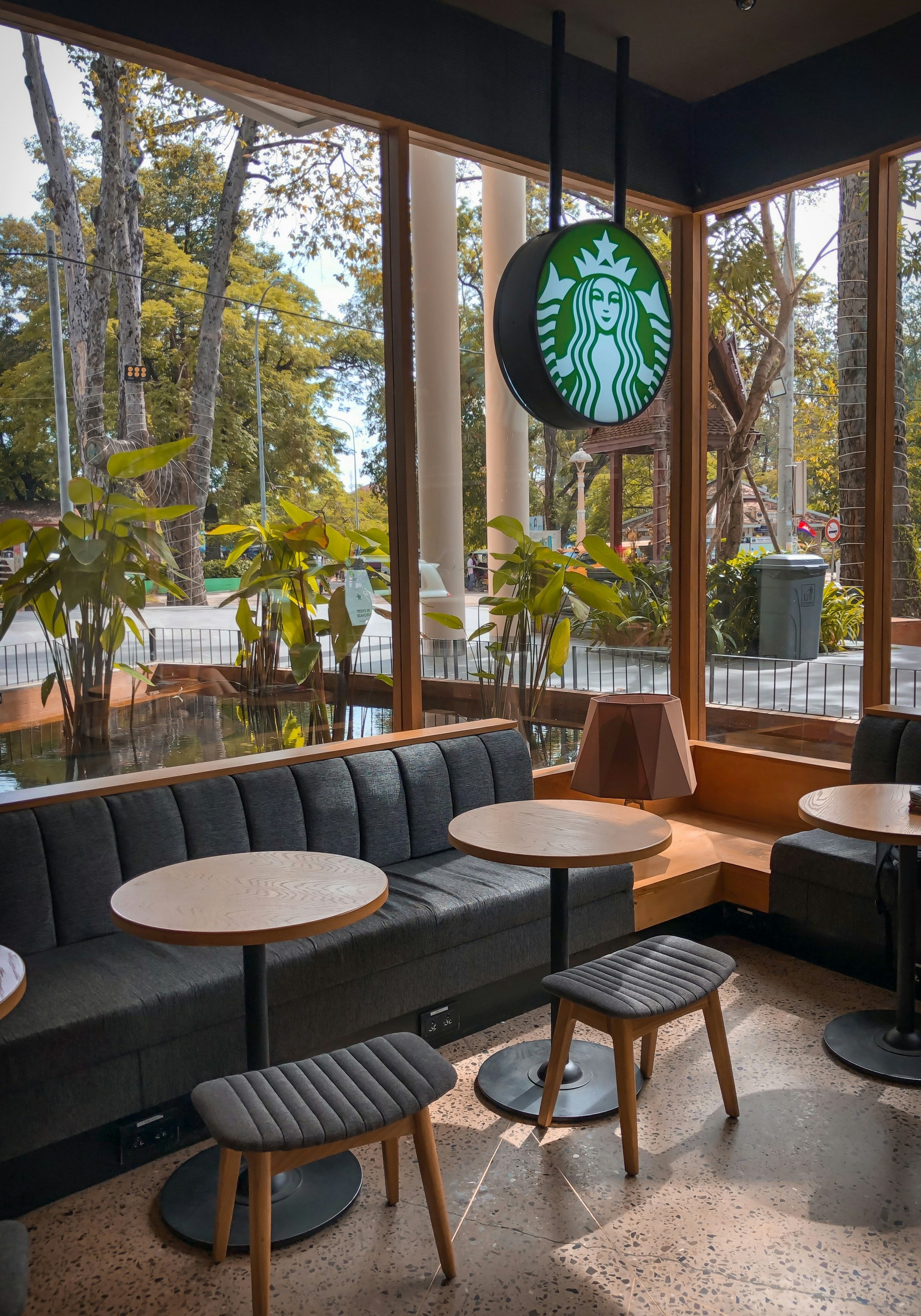
I walked into my local Starbucks for my mobile order and quickly assessed the situation. Customers were standing, staring at the mobile-order pickup station and the baristas. No smiles, just looks of concern. Some were looking at their watches or phones.
There is a finite amount of time between pulling out of your driveway and arriving at your desk. The commute is typically made a bit more enjoyable by sipping coffee through a friendly green straw. Today wasn't going to be that day for me.
Between the number of cars in the drive-thru, the customers standing in one direction facing a team working as fast as the blenders and frothers could keep up, and the few drinks sitting at the mobile-order pickup station, my QSR mental math told me it would be another 20 minutes.
Time I didn't have if I was going to make my 8 a.m. leadership meeting.
This was unusual compared with the improved service and delivery I'd experienced over the last several months at my local Starbucks. It must be a blip, I thought.
I walked out.
From my McDonald's experience with kitchen systems, staffing, and service, I knew something had caused the backlog, and it would take time to clear.
A rush could easily be thrown off-kilter by fries. Twenty cars deep, all because fries weren't "dropped," meaning a dozen open bags in the kitchen, filled with hot hamburgers, all waiting for fries.
Maybe someone called off work 20 minutes before the start of their shift, leaving a key drive-thru position unfilled and the team short-staffed. Then there are the issues outside employees' control, such as a piece of kitchen equipment or the POS system not working.
Or it could simply be that it was Friday, payday, the weather was unseasonably warm for October, and gas prices were down that week. Pressure was easing, people were ready to spend a little more, and store traffic may have been higher than forecasted.
Regardless, I had no time to diagnose the situation. I was out of time. There would be plenty of KPIs for the store team to review internally.
My contingency plan, a Keurig pod, was in the back of my mind as I focused on my first meeting of the day and everything I needed to accomplish. Successfully picking up my mobile order would not be one of them.
I planned to address it later and moved on.
While running my Saturday morning errands, I stopped at Starbucks again. Clearly, it was a much different experience. The crowd in the store was more relaxed. I went to the front counter and explained the situation from the morning before to the associate.
She winced a bit, probably recalling Friday's morning shift. I expected what I've typically received from similar experiences: "Call the 800 number," "Let me get the manager," or just plain unpleasantness.
Something different happened.
Something that, to me, represents a simple yet tremendous shift at Starbucks.
She wasn't overly elated or smiling abundantly. But she did say, "I'm sorry about that. What did you order?" and proceeded to enter my order at no charge. When the barista called my name, I realized the team had made me a Venti instead of the Grande I'd ordered and added a sweet message on the cup in black Sharpie.
We both moved on, and I felt much better about the brand.
The recovery wasn't about the cost of the coffee. It was about an employee who appeared content to resolve my issue without friction and restored my relationship with the brand. In fact, this past Friday, for the first time in years, I opened my laptop, drank out of a ceramic cup and worked for a few hours out of this same Starbucks location. It was very pleasant.
Leveraging the Army at Your Service
Brian Niccol, CEO of Starbucks, is in year two of driving a turnaround. He has emphasized bringing the coffeehouse experience back as a central part of the company's strategy.
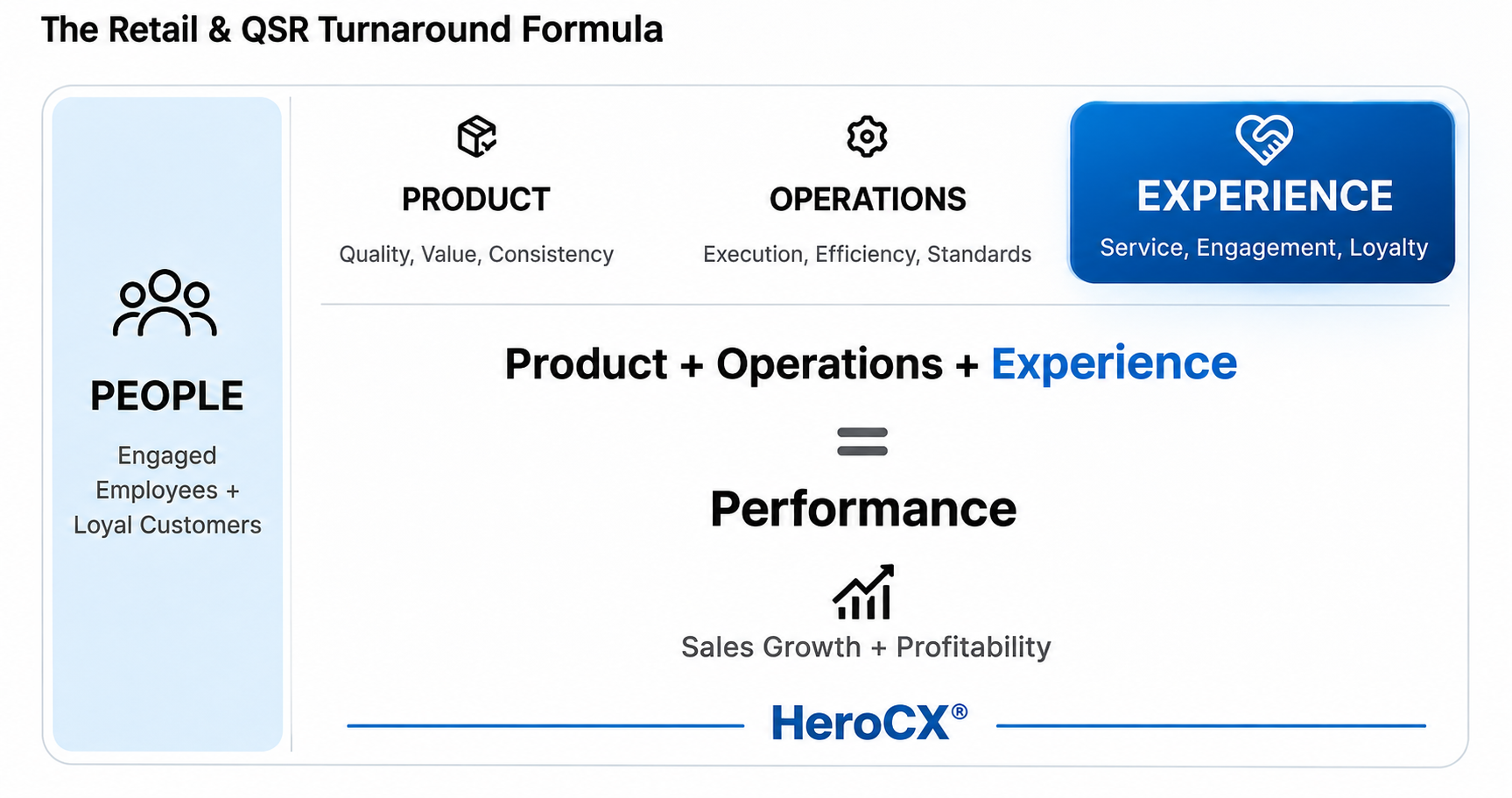
Niccol is leveraging three fundamental elements of a retail turnaround: product, operations, and experience. In a September 2026 CNBC interview, he said, "Starbucks is back. The experience is back in our coffee houses." Source
Most leaders focus on the fundamentals: having a great product with market fit, one that is in demand, relevant, and targeted to the right customer segments.
Operations are also non-negotiable. Turnaround leaders must understand the system constraints that limit growth, manage food and labor costs, and improve profitability.
The third element, customer experience, is often the most overlooked during a turnaround. Yet it is frequently part of the original DNA that made the business successful as it scaled.
Niccol's turnaround strategy isn't just about financial fundamentals. It reflects an approach that successful growth brands across the industry have demonstrated: customer experience should be as intentional as product and operations.
People are not just working at retail store locations anymore. They are an army of brand ambassadors waiting to be empowered.
In a turnaround, the battle is against decline. Starbucks has the opportunity to leverage its green apron brigade to elevate the customer experience, one interaction at a time.
Consider Chick-fil-A.
Chick-fil-A took a simple phrase used after an order or customer interaction and standardized it until it became synonymous with the brand. Instead of "No problem," "Gotcha," or even "Thank you," employees respond with "My pleasure."
Those two words communicate something different. They suggest that serving the customer isn't an inconvenience; it's something the employee takes pride in doing.
When employees repeat that phrase dozens of times a day, supported by a culture that reinforces the same expectation, it becomes part of the service DNA and a recognizable part of the customer experience. Of course, the product must be good and continually evolving, and operations must run smoothly.
But experience is the ingredient that gives customers a reason to keep coming back and employees a reason to take pride in delivering it.
The three legs of the retail turnaround stool are clear: a product in demand with strong market fit, operations that respect customers' time while supporting profitability, and an experience that prioritizes customers and their success.
Customers Will "Pay for Pleasant"
In today's QSR environment, customers are willing to pay a premium when they can count on an experience that is consistently pleasant, respectful of their time, and free of unnecessary friction.
That doesn't mean everything will always go right. Operational breakdowns happen. Orders get delayed. Equipment fails. Even the best systems have bad days.
When an employee treats a customer concern as an opportunity to make things right rather than an inconvenience to manage, the experience changes. A simple acknowledgment, a little kindness, and the ability to resolve an issue can restore confidence in the brand.
That was my Starbucks experience.
In fact, according to the 2026 QSR Drive-Thru Report, when mystery shoppers rated their experience as friendly, their satisfaction scores were over 70 points higher. "Simple gestures, such as greeting or welcoming a guest by name, or writing their name on the bag," counted toward personalization and friendliness.
I didn't need an explanation of what went wrong on Friday. I didn't need to review their operational KPIs. I just wanted someone to acknowledge the issue and make it right with an improved experience.
And they did.
Customer experience can be an overlooked element of a turnaround or it can be a differentiator and contribute to growth when it's recognized and leveraged.
Explore Topics

Written by
Salena Scardina
Salena Scardina is a customer experience strategist driving growth and turnaround at brands focused on leveraging technology with human connection.


